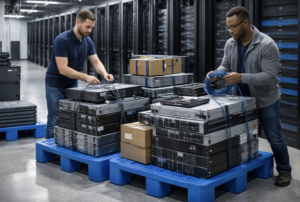
In a lot of IT environments, safety conversations tend to focus on cybersecurity, device access, and uptime. Those things matter, but the physical side of the operation matters too. Servers, switches, backup units, replacement hardware, batteries, cooling systems, cleaning supplies, and staging materials all live in real rooms with real floors, real loading areas, and real maintenance demands. That means storage discipline is not just a warehouse issue. It is an IT issue.
That reality is becoming even more important as hardware demand rises. Reuters reported on Dell’s AI server outlook, Reuters also reported on growing pressure on storage systems, and Reuters has covered how liquid cooling is becoming more critical in AI-focused data centers. When the value and density of IT equipment go up, the importance of protecting the surrounding environment goes up with it.
Why Physical Storage Still Matters in IT
An IT company may think of itself as digital-first, but most IT operations still rely on physical infrastructure. Managed service providers have storage rooms. Enterprise offices have network closets. Repair teams have benches, parts shelves, and receiving areas. Larger operations may support a server room or a full data center. Even when the main focus is software, cloud services, or support, the business still depends on safe handling of hardware, accessories, maintenance supplies, and facility support materials.
That is where Drum Pallets fit in. They are not there to replace shelving for laptops or to serve as display pieces in an equipment room. Their value is in helping control the risks created by liquids, drums, and maintenance materials that often sit near sensitive technology. In practical terms, they help create cleaner, more controlled storage zones around the systems your IT team depends on every day.
How Drum Pallets Protect Equipment from Leaks and Floor-Level Risk
IT equipment does not have to be stored inside a spill to be damaged by one. A leak from cleaning chemicals, coolant containers, generator-related fluids, or other support materials can spread across a floor, move into nearby storage zones, and create both contamination and slip hazards. In an environment where expensive hardware may be staged for deployment, waiting for repair, or sitting in boxes near the loading area, that kind of floor-level problem can turn into a very expensive mistake.
That concern is especially relevant now because IT infrastructure is becoming more demanding, not less. Reuters’ reporting on Google’s cooling-system sourcing and Reuters’ coverage of Ecolab’s CoolIT acquisition both highlight the growing role of liquid cooling in modern AI data center environments. More cooling equipment and more support fluids around high-value systems means physical containment becomes a smarter part of operational planning.
Drum pallets help by giving those liquid-bearing materials a designated place to sit, rather than leaving them on bare concrete where a small failure can spread fast. That creates distance between risky materials and the zones where servers, workstations, peripherals, or replacement equipment are stored. It also makes it easier for teams to spot a problem early, isolate it, and clean it up before it reaches cabling, cartons, pallets of electronics, or active equipment nearby.
Better Storage Habits Support Better IT Asset Discipline
Good IT operations depend on visibility. If a team does not know what it has, where it is, what condition it is in, or what is sitting around it, that team is already working at a disadvantage. The National Institute of Standards and Technology explains in its IT asset management guidance that effective ITAM ties together physical and virtual assets and improves both asset utilization and security. That is an important reminder that digital inventory and physical organization are supposed to work together, not separately.
Drum pallets support that bigger discipline. When liquids, maintenance supplies, or specialty containers have a dedicated location, your storage areas become easier to map, cleaner to inspect, and safer to manage. Instead of random containers sitting beside boxed monitors, replacement switches, or battery backups, the facility has a more intentional flow. That makes day-to-day operations easier for technicians, easier for facility staff, and easier for leadership trying to maintain professional standards across the building.
It also strengthens the image of the operation. Clients may never see the back room, but teams feel the difference between a controlled environment and a sloppy one. A cleaner storage area tends to improve handling habits, reduce accidental damage, and make it easier to take safety seriously. In IT, where one careless moment can ruin costly hardware or delay a project, that matters more than many companies realize.
Drum Pallets Help During Receiving, Staging, and Maintenance
One of the most overlooked risks in IT is the transition zone. Equipment usually gets damaged or exposed during movement, not during quiet long-term storage. Receiving docks, staging areas, temporary holding spaces, and maintenance corners are where hardware often sits while teams are busy doing ten other things. Those are also the same areas where cleaning supplies, support fluids, and miscellaneous materials tend to collect.
As Reuters reported on the tech supply chain impact of helium shortages, even upstream production inputs can create ripple effects across electronics availability. When equipment is harder to replace, protecting what is already in your building becomes even more valuable. A simple spill event near staged networking gear, replacement drives, boxed laptops, or cabling can cause delays that are harder to recover from in a tight supply environment.
Using drum pallets in receiving or maintenance zones helps define what belongs where. It keeps drums and fluid containers off the general floor and out of the path of carts, foot traffic, and incoming hardware. That kind of separation may sound basic, but in real operations, basic controls are often the difference between a smooth deployment day and a frustrating cleanup that interrupts the whole schedule.
They Also Support Safer Refresh Cycles and End-of-Life Handling
IT companies constantly rotate equipment. Old desktops get removed. Failed backup units get replaced. Cables, power components, batteries, and accessories move in and out all the time. During refresh cycles, the workplace can get cluttered fast. Without structure, retired equipment and support materials can pile up in the same area, creating confusion and increasing the chance of improper handling.
The U.S. Environmental Protection Agency emphasizes in its electronics donation and recycling guidance that electronics should be donated or recycled safely and correctly, and that data should be deleted before items are donated or recycled. That lifecycle view matters for IT teams because proper storage is not only about what is going live. It is also about what is being retired, wiped, held for pickup, or processed for disposal.
Drum pallets can support that process by giving fluid-bearing items and related materials a contained holding point while electronics are sorted separately. That reduces the chance that outdated hardware, maintenance chemicals, and other back-room items all end up mixed together in one messy corner. It creates cleaner handoff points for recycling vendors, internal facilities teams, and outside service providers.
Why This Matters More for Modern IT Businesses
There was a time when an IT storage room might have meant spare keyboards, a few towers, and a cabinet of cables. That is not the world many IT businesses operate in now. Today’s environments may involve denser servers, more backup power support, more cooling complexity, more staging volume, and more pressure to protect uptime. Reuters’ coverage of storage demand in AI systems and Reuters’ reporting on liquid cooling growth both point to the same larger truth: the physical layer around IT equipment is getting more valuable, more technical, and less forgiving.
That is why a simple containment product can play a meaningful role in a strong IT operation. Drum pallets help protect floors, organize support materials, reduce spill exposure, and create clearer boundaries around where risky materials should live. They do not replace good policies, trained staff, or smart inventory systems. They support them. In a well-run IT environment, those details are not small. They are part of the standard.
Conclusion
IT companies invest heavily in hardware, performance, security, and reliability, but the physical storage environment around that equipment deserves just as much respect. Drum pallets support that effort by helping contain leaks, separate risky materials from valuable hardware, improve organization, and make storage areas safer and easier to manage.
When you look at how modern IT environments are changing, the case becomes even stronger. Equipment is more expensive, cooling demands are growing, supply chains are tighter, and operational mistakes cost more than they used to. A cleaner, safer storage setup is not just a facility upgrade. It is part of protecting the equipment, the workflow, and the reputation of the business.